4.14 Nodes (Electricity, heat, cooling and waste heat)
The role of the network nodes is to act as decision points in a network where energy demand is aggregated and loads are allocated (to dispatchable assets), using a control strategy, in order for the providers to meet the demand. Linked nodes create a hierarchy of aggregation through parent-child relationships.
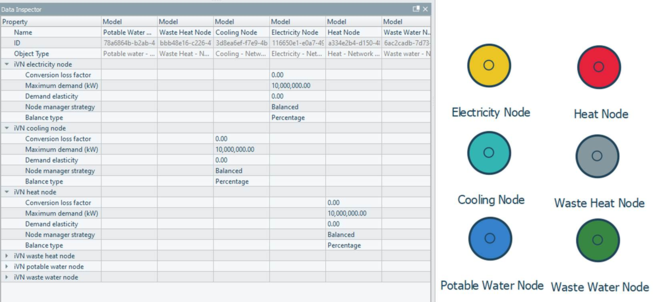
Loads are allocated to attached network objects according to a control strategy, which is defined on each node. The available control strategies are:
·Balanced: allocate load evenly across all network installations, either as an absolute amount or as a percentage of maximum load;
·Sequential: allocate load in a specific order; and
·Ranking: allocate load in rank order except when installations have equal rank, in which case the load is balanced across those objects with equal rank.
Figure4-16: Node properties available for user editing
The ID number of each Node object is unique and used for simulation. The name is not used by the simulation engine, but should be used to give the object meaningful identification within the project.
The contents of 4.14 Nodes (Electricity, heat, cooling and waste heat)